
Fibers
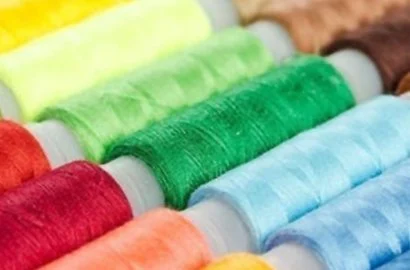
For the fiber industry LIST has developed several industrial proven, state of the art processes to produce solution for the spinning of natural (cellulose based) and synthetic fibers.
The main process task in the fiber industry is the uniform dissolving of a raw material in a solvent resulting in a high viscous, flawless and almost bubble free spinning solution. The very good quality of LIST spinning solution considerably facilitates all downstream process steps and helps to improve the plant economy.
Fiber manufacturers have found that fibers which have been spun with LIST spinning solution have superior qualities than fibers produced by conventional methods. In addition there is the possibility to apply the LIST Process Solution to produce innovative functionalized fibers.
You might be interested in these processes
Examples
Downloads
A new dissolution process for cellulose spinning solution was developed. As Basis for the new process served the classic cellulosic fiber production process. In the last 30 years or so the conventional viscose process became environmentally critical. Evaluated with regard to its environmental viability it was found to create considerable water and air pollution. This conclusion ignited the research and development of new technologies with less environmental impact.
Language: English / Year: 1999
LIST further optimized the cellulose dissolution technology, which was introduced in 1992. This succeeded the production of excellent spinning solution qualities, produced from a variety of low cost raw materials. The technology fulfils the current high safety standards.
Language: English / Year: 2001
Der LYOCELL-Prozess ist eine moderne umweltfreundliche Möglichkeit zur Umwandlung von verschiedensten cellulosischen Rohmaterialien der Natur in Fasern, Filamente und Folien zur weiteren Verarbeitung in der Textilindustrie, der Verpackungsindustrie oder als Strukturbildner in technischen Anwendungen. Die Nassreißfestigkeit der LYOCELL-Faser übertrifft sogar die der Bauwollfaser.
Sprache: Deutsch / Jahr: 2004
As world consumption of textile fibers expands with the rapid growth of Asia and other developing countries, sources of fibers other than cotton and rayon must be developed and brought to market to meet demand. Cellulose fibers (Lyocell fibers) can meet these expanding needs because of the specific qualities and characteristics of the fiber, as well as the vast availability of the raw materials.
Language: English / Year: 2004
The Lyocell fiber process is developed to transform cellulose to a man-made cotton-like fiber. The lyocell process includes a number of processing steps. The dissolving step is the most important one. It represents the heart of the lyocell technology. Kneaders developed by List AG, Arisdorf/Switzerland, are successfully applied for the continuous dissolving step whereby raw materials of different origin can be processed and transferred into a spinabie dope.
Language: English / Year: 2006
Fiber, filament, flies and foil are the final products of a complex process of mixing, dissolving, spinning, washing and drying of raw material. Many specialists believe that the spinning part is the only relevant processing step for the final fiber quality. This belief falls short, as the fiber quality also depends on the dissolving step before the spinning step.
Language: English / Year: 2014
For decades, conventional polymerisation has been the norm in the production of elastomers. The time and cost involved in removing and treating solvents in the final stages of production were acceptable. Yet as pressure builds on manufacturers to reduce operating costs, there is greater urgency to develop processes that can help streamline costs and production techniques. One such effort has yielded extremely promising results.
Language: English / Year: 2015
From Lab Testing to Industrialization, discover how LIST helps knead wood into textile with one of the most advanced, environment-friendly cellulose-based fiber production technologies.
Language: English / Year: 2019